
Chicken biryani step by step is easier than your mother made it look. Most people ruin their pot because they rush the fried onions or make the rice too soft before layering. When you balance those two parts, every long grain stays separate and full of rich flavor.
The secret is simple. Parboil your soaked basmati rice to exactly 70 percent, cook your spiced chicken in whole-milk yogurt until the oil floats on top, and seal the pot tight on low heat for 20 minutes. That slow steam brings the rice and chicken together without turning anything into mush.
The Spices You Need for Real Taste
Do not buy boxed spice packets if you want your kitchen to smell like a wedding house. Whole spices cooked in hot oil give a sweet smell that powders can never copy. Here is the exact list my grandmother wrote in her yellow diary, measured for 1 kilogram of bone-in chicken.
Bone-in chicken thighs and drumsticks work best. Chicken breast dries out too fast under slow steam. Cut the chicken into 12 to 14 big pieces so they stay juicy while cooking.
- 1 kilogram chicken, skin removed, cut into large curry pieces
- 750 grams long-grain aged basmati rice, washed until water runs clear
- 4 medium red onions, sliced paper thin
- 1 cup sour yogurt, beaten smooth
- 2 tablespoons ginger paste and 2 tablespoons garlic paste
- 2 teaspoons red chili powder and 1 teaspoon turmeric powder
- 1 tablespoon coriander powder and 1 teaspoon cumin seeds
- Whole spices: 2 black cardamoms, 6 green cardamoms, 2 bay leaves, 5 cloves, and one 2-inch cinnamon stick
- 1 cup fresh mint leaves and 1 cup chopped fresh coriander
- 4 green chilies, sliced right down the middle
- Half a cup of warm milk mixed with a generous pinch of saffron strands
- Half a cup of cooking oil mixed with 3 tablespoons of pure desi ghee
You can read more about how classic regional curries build flavor on our desi home cooking recipes page. Good cooking always starts with the right fat and whole spices.
Step 1: The Golden Onion Base (Birista)
Your biryani gets its dark color and deep sweetness from crispy fried onions. We call this birista. If you burn your onions, your whole dish will taste bitter, and no amount of yogurt can fix it.
Heat your oil and ghee in a heavy pot over medium heat. Drop in your thin sliced onions. Keep moving them with a wooden spoon so every slice cooks at the same speed. They take about 12 to 14 minutes to turn from white to soft pink, and then golden.
The moment they look light honey brown, take them out with a slotted spoon onto a flat plate lined with paper towels. They will keep cooking on the plate from their own heat. Spread them out wide. Within three minutes, they turn crisp enough to crush between your fingers.
Keep half of these crispy onions for layering later. The other half stays in the pot to make your thick chicken gravy.
Step 2: Cooking the Rich Chicken Masala
Now drop your whole spices into that same fragrant onion oil. Listen to them crackle for twenty seconds. The bay leaves will darken, and the cardamoms will puff up like little pillows.
Add your ginger and garlic pastes next. Stir fast for one minute so they do not stick to the bottom. Add the chicken pieces. Fry the meat on high heat until the pink turns totally white, which takes around six minutes. This step seals the juices inside each piece.
Lower the heat before you add the yogurt. If the pan is screaming hot, the yogurt will split into white curds. Stir in the yogurt, red chili powder, turmeric, coriander powder, cumin seeds, and two teaspoons of salt. Mix well until the chicken is coated in thick red sauce.
Cover the pot with a lid. Let it cook on low heat for 15 minutes. The chicken will release its own juices, so do not add any extra water. Take the lid off and turn the flame to medium. Cook until the gravy turns thick and shiny oil sits clearly on top. You want a thick gravy, not a watery soup. If you love quick meat dishes made in a similar heavy pan, try our Chicken Karahi at Home: Real Dhaba Taste in 30 Minutes on your next busy weeknight.
How Do You Boil the Rice for Biryani?
This is where most cooks fail. Getting the rice right is the backbone of traditional Biryani across the subcontinent. If your rice is soft now, your biryani will turn into sticky porridge during the steam stage.
Wash your aged basmati rice four times in cold water. Be gentle so you do not snap the long tips. Let it sit in a bowl of fresh water for 30 minutes. That soak helps the grains stretch to their full length when heat touches them.
Bring a very large pot with four liters of water to a rolling boil. Add three tablespoons of salt. The water must taste salty like soup broth, or your final dish will taste plain. Drop in two green cardamoms, one small cinnamon stick, and a squeeze of fresh lemon juice. The lemon juice keeps the rice bright white.
Drop the soaked, drained rice into the bubbling water. Set a timer on your phone for six minutes. Do not leave the stove. Stir just once, very gently. Take a grain out at the six-minute mark and press it between your thumb and forefinger.
It should feel firm on the outside, and snap into three tiny pieces in the middle. We call this 70 percent cooked. Pour the pot through a large colander right away to stop the cooking. Never rinse it with cold tap water.
Step 3: Layering and the Dum Steam
Now comes the fun part. The word dum means steam under pressure, an ancient method loved in Pakistani cuisine for feast days and Sunday family lunches. It locks the meat perfume right into the dry rice grains.
Take your wide, heavy-bottom pot. Leave the thick chicken gravy and meat at the bottom as your first layer. Sprinkle half of the chopped mint, chopped coriander, and slit green chilies over the chicken. Scatter half of the crisp fried onions you saved earlier.
Now pile your warm, drained rice over the chicken. Spread it gently with the back of a spoon, but do not press down. You want loose air pockets between the grains so steam can travel up freely.
Drizzle your saffron milk across the top in straight lines. Add two extra tablespoons of melted ghee over the rice so every grain shines. Scatter the rest of your fried onions and mint on top. It looks like a painting already.
Seal the pot tight. You can wet a clean kitchen towel, place it over the mouth of the pot, and push the heavy lid down hard on top. Fold the towel edges up over the lid so they do not catch fire. If your lid is light, place a heavy mortar or a stone bowl on top to trap every bit of steam inside.
Put the pot on high heat for three minutes until you hear the liquids boiling at the bottom. Then move the pot over a heavy iron tawa or flat skillet, and turn your flame to the lowest setting. Let it sit there in its own trapped steam for 20 minutes without lifting the lid even once.
How to Open and Serve without Breaking the Rice
When the 20 minutes are done, turn off the flame. Do not open the lid yet! Let the pot rest for another 10 minutes on the counter. This quiet rest lets the meat relax and pulls the floating steam back into the grains.
Take off the lid. A thick cloud of saffron and cardamom steam will hit your face. Use a flat, wide saucer or a thin rice paddle to serve. Never use a deep ladle or stir from the center like a soup pot.
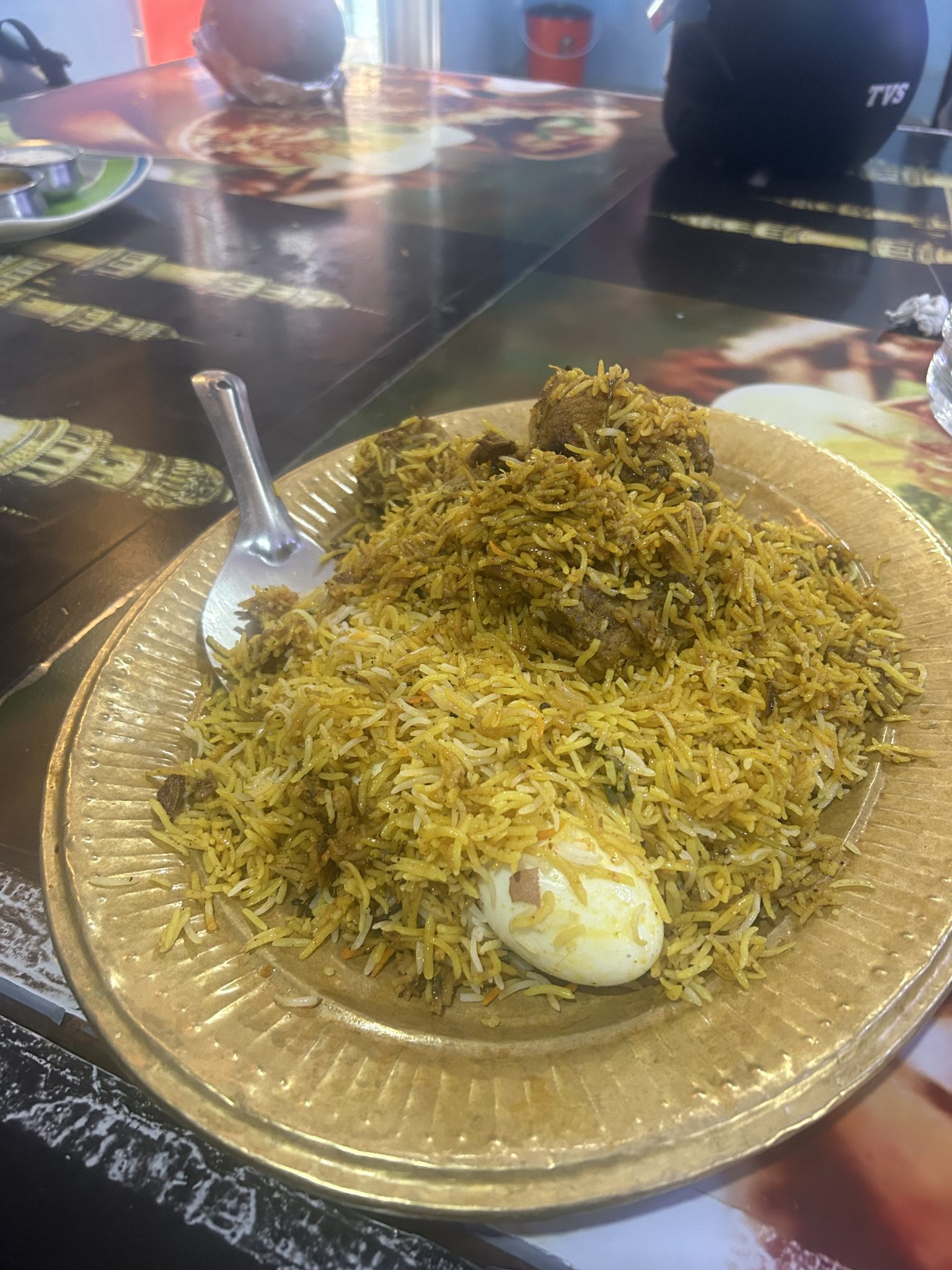
Cut into the pot from the outer edge, lifting the bottom meat layer up through the white and yellow rice. You will see three colors on your platter: bright white grains, rich orange saffron grains, and deep brown masala rice, alongside tender chicken that pulls easily from the bone.
Put a bowl of cold cucumber raita and sliced red onions beside the big platter. Call everyone to the table right away, because true home biryani waits for no one.